Governance
Hand over the promises too
Thozamile Ngcozela KaDlanga, Managing Director
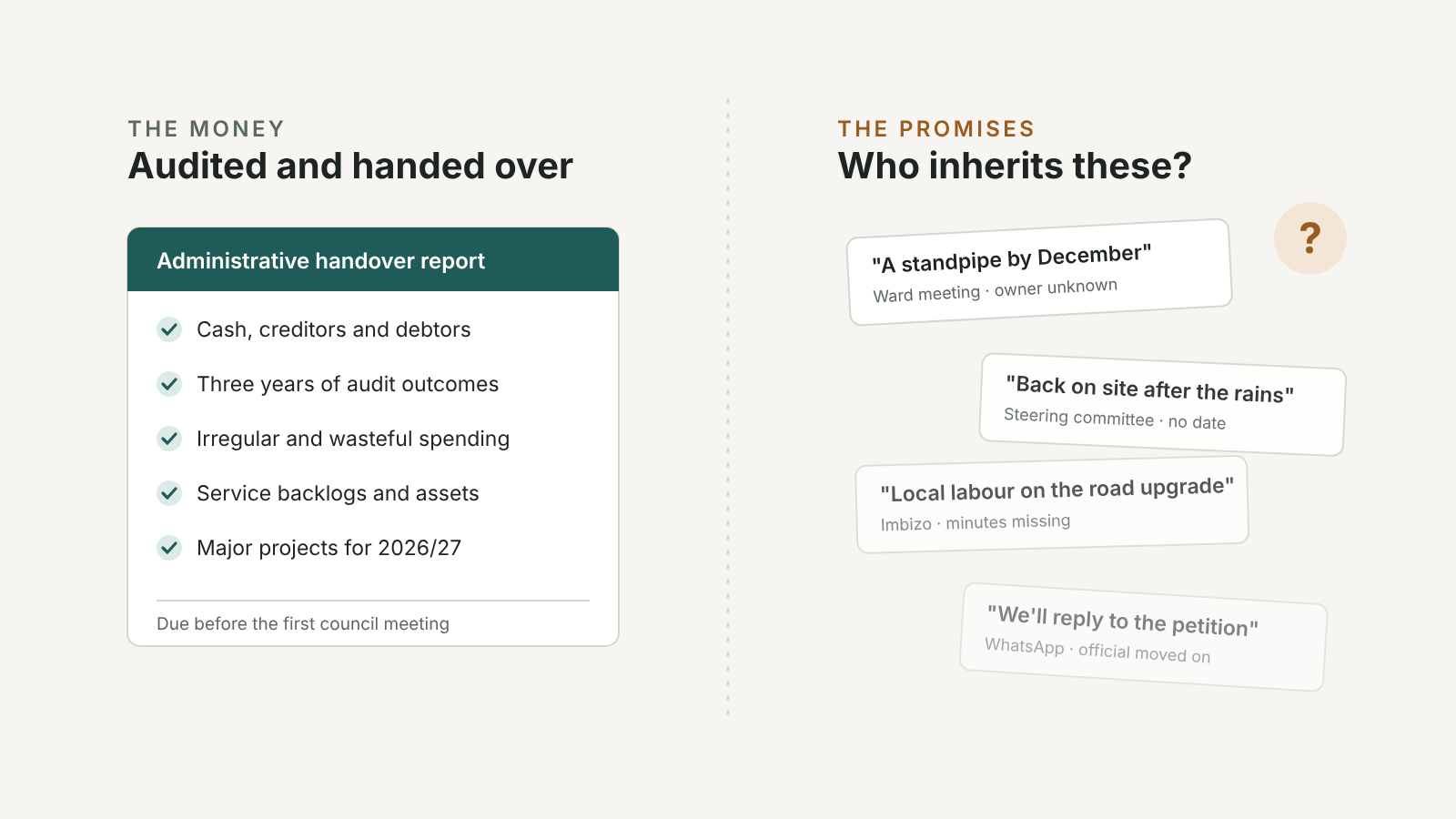
As the councils elected on 4 November take their seats, national government has given them a blunt message: office is a public trust, not a licence to loot.
The joint guidelines from the Department of Cooperative Governance, National Treasury and SALGA are clear. Fraud, corruption and maladministration must be "dealt with decisively and reported without delay". Municipal money may not pay for party or coalition activity. Officials who authorise unlawful spending can face misconduct proceedings and personal liability.
The warning is needed. Only 39 of 257 municipalities received clean audits in 2024/25, according to the Auditor-General, and as of mid-2026 municipalities owed Eskom a reported R122.5 billion in overdue debt. Behind those numbers are households with dry taps, dark streets and sewage in the road.
But a public trust is more than a bank balance. Residents don't only give a council their rates and their votes. They give it their patience, on the strength of promises. That trust can be looted too, quietly, one forgotten promise at a time.
The guidelines get the hardest part right
The strongest idea in the guidelines is the handover report. Before the first council meeting, outgoing leaders must prepare two of them. The political report covers how the council governed and what was learnt. The administrative report, prepared by the municipal manager and the CFO, covers cash and creditors, three years of audit outcomes, irregular and wasteful spending, consequence management, service backlogs, the condition of assets and the major projects for 2026/27.
That ends a familiar excuse. A new council that inherits the full record can't say it didn't know. The guidelines also give councils 120 days to set up ward committees "through credible and democratic processes". A council that knows its books and hears its wards has a fighting chance.
What the handover leaves out
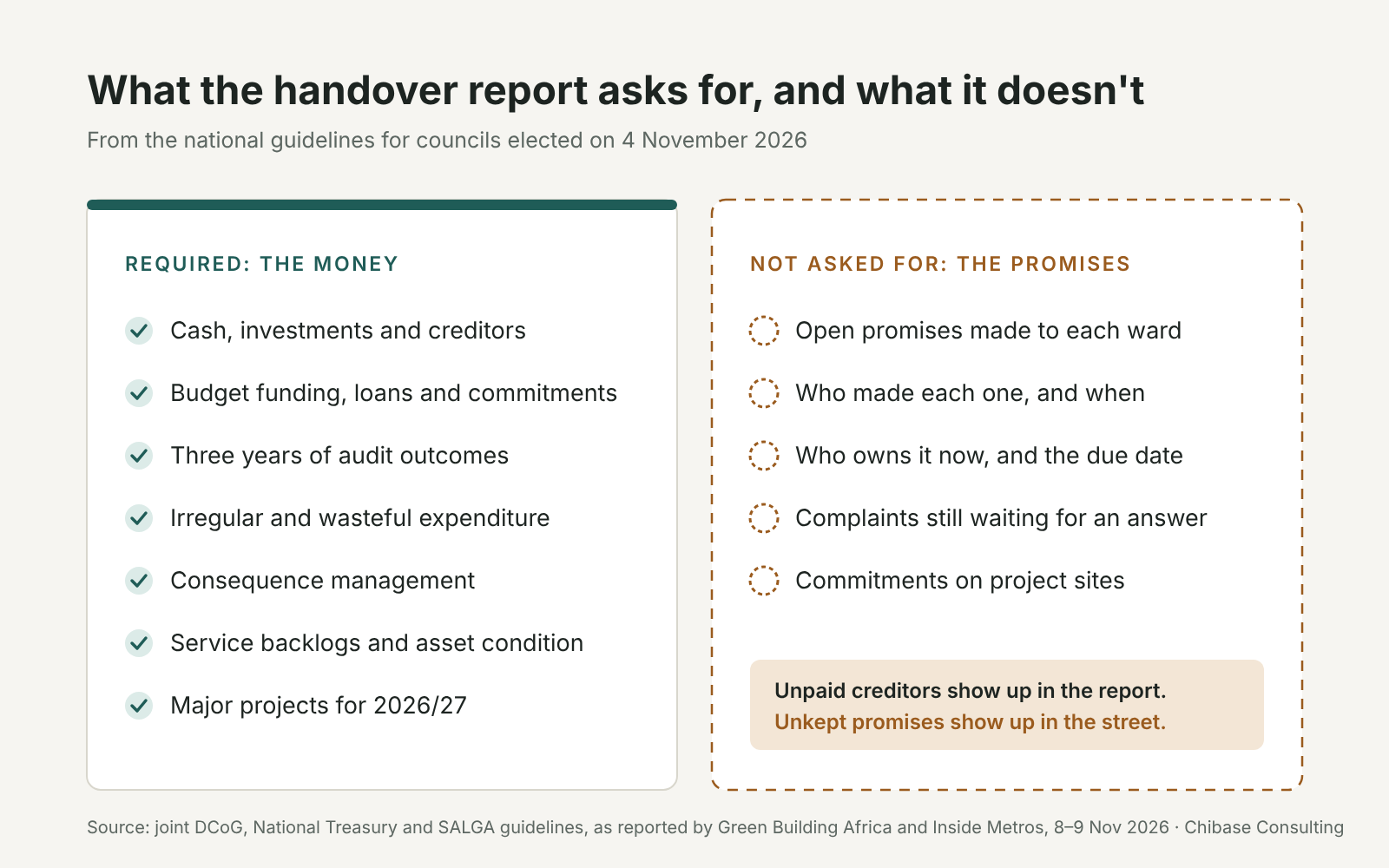
Read the list again. It is a full record of the money. What it doesn't ask for is a record of the promises.
Over five years, a council and its officials make hundreds of commitments to communities. A standpipe by December. A contractor back on site after the rains. Local labour on the road upgrade. A reply to the petition about the flooded houses. These are made in ward meetings, project steering committees, imbizos and on WhatsApp. Most are never written down in a way the next council can find.
In our work as social facilitators on infrastructure and housing projects, this is where trust breaks. The councillor who made the promise is gone. The official has moved on. The minutes can't be found. To the community it doesn't matter who left. What they see is the same pattern again: a promise, then silence. And when people stop believing the lawful channels, they use the one that always gets attention. They close the road or stop the site.
A backlog of unpaid creditors shows up in the handover report. A backlog of unkept promises shows up in the street.
Hand over the promises too
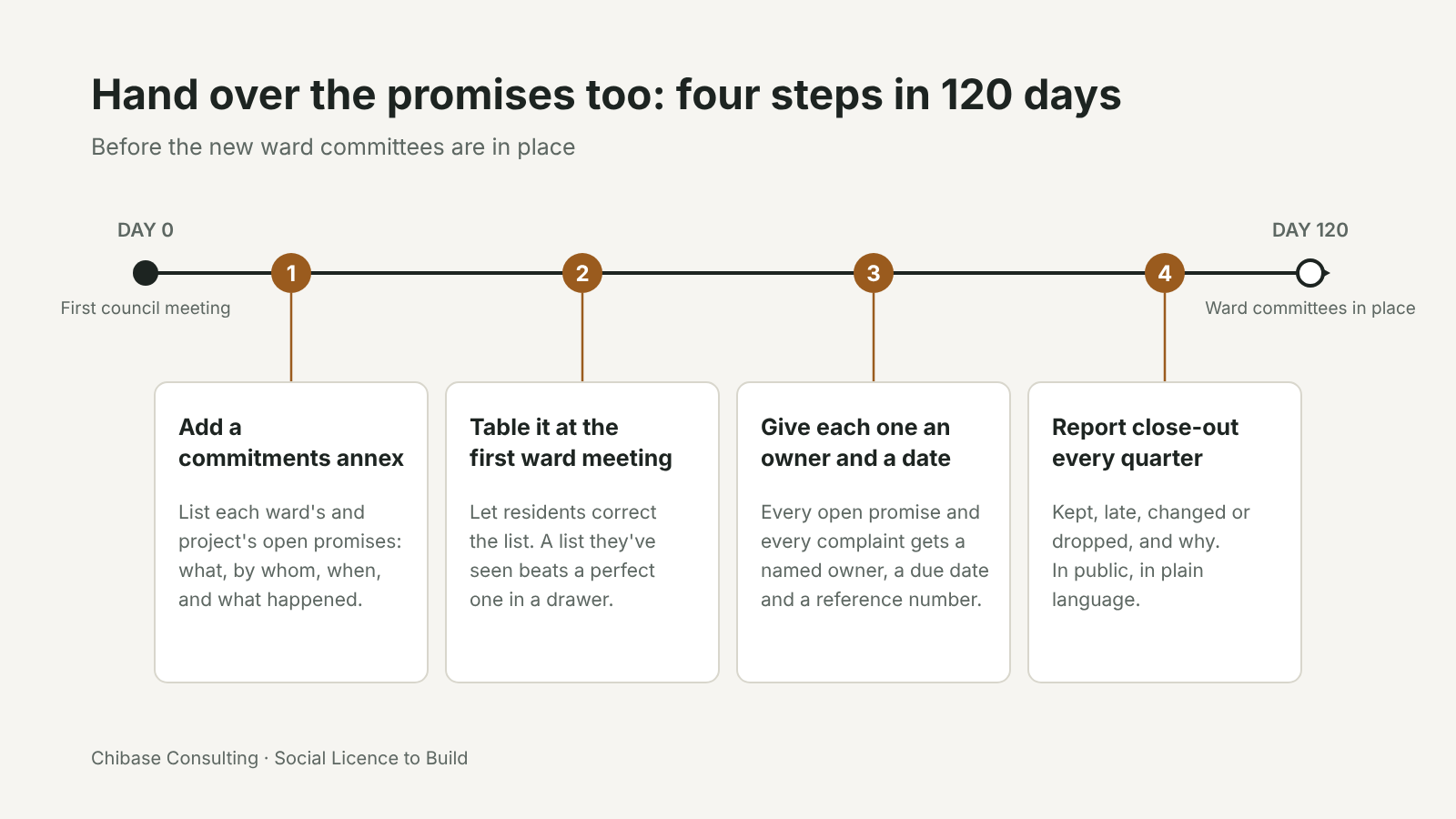
No new law is needed. A council that takes the "public trust" message seriously can do four things before its ward committees are in place:
- Add a commitments annex to the handover. For every ward and every major project, list the open promises made to communities: what was promised, by whom, when, and what has happened since. Where nobody knows, say so.
- Table each ward's list at the first ward committee meeting. Let residents correct it. A list the community has seen and amended is worth more than a perfect one in a drawer.
- Give every open promise and every complaint an owner and a date. A promise without an owner is a wish. A complaint without a reference number is a rumour.
- Report close-out every quarter, in public. How many promises were kept, how many are late, and how many were changed or dropped, and why. People forgive slow progress far more easily than silence.
None of this is expensive. It asks for the same discipline the guidelines already demand for the money: keep the record of what was promised as rigorously as the record of what was spent. That is the thinking behind our practice, and behind TrustLedger. But the habit matters more than the tool. A council can start with a spreadsheet tomorrow.
The real test
The guidelines say municipal resources must be directed towards improving the lives of communities. In five years, residents will judge this term by that standard. They won't only ask whether the books were clean. They will ask whether the things they were promised happened, and whether anyone could tell them when they didn't.
If your council had to hand over its open promises tomorrow, could it find them? If the answer is "not yet", talk to us.
Sources: Auditor-General, local government audit outcomes 2024-25; Green Building Africa, 9 Nov 2026; Inside Metros, 8 Nov 2026.