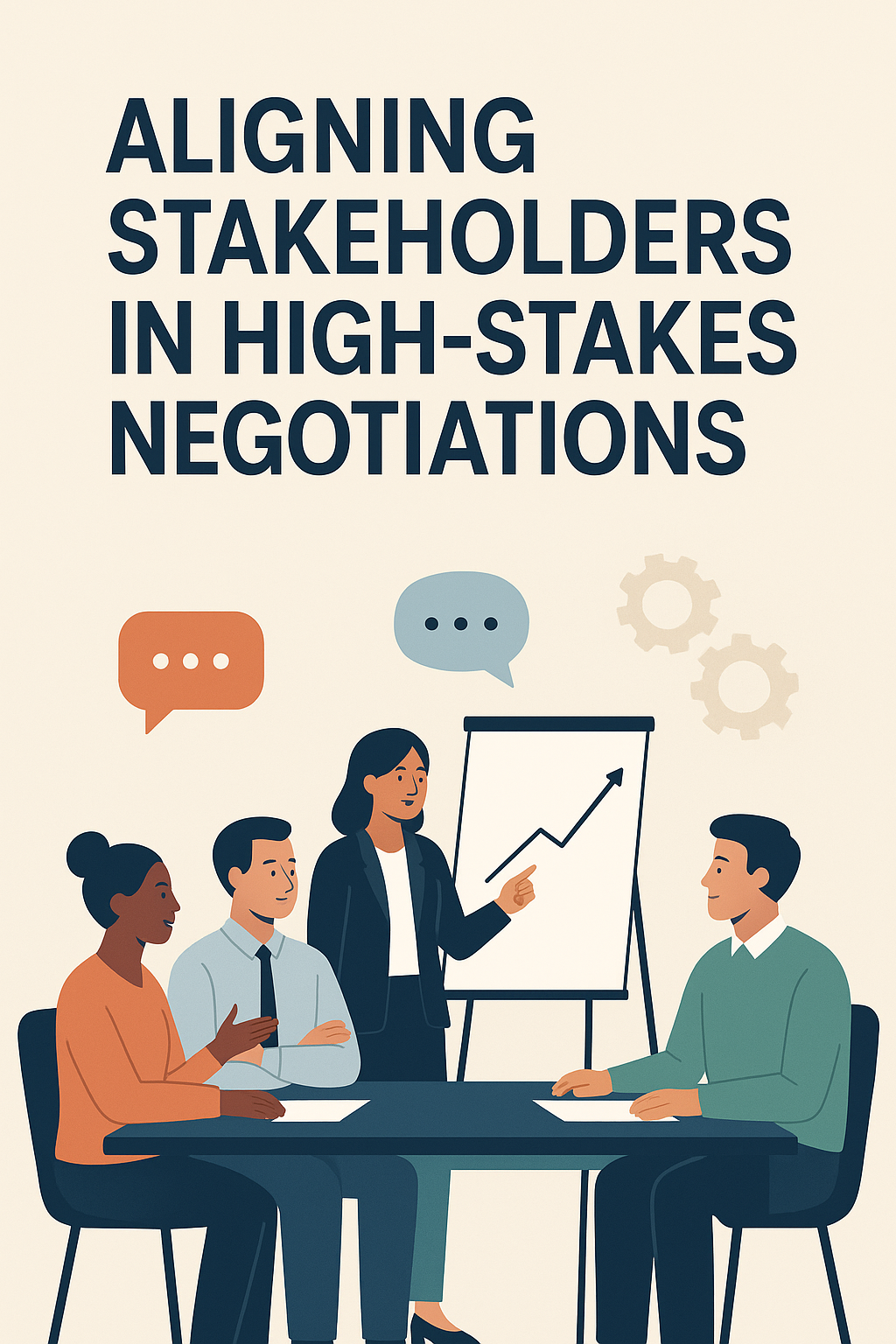
Aligning Stakeholders in High-Stakes Negotiations
When the stakes are high, negotiations often become a test of patience, influence, and resilience. Whether it’s resolving community disputes in a large housing development or securing multi-party agreement on an ESG project, one truth holds steady: alignment is the key to success.
Without alignment, even the best proposal can collapse under mistrust, miscommunication, or competing priorities. With alignment, seemingly impossible deals become achievable.
At Chibase Consulting, we’ve spent years facilitating conversations where not everyone starts on the same page — but by the end, they’re turning it together. Here’s how we do it.
1. Clarify – Start with Shared Goals
Stakeholder negotiations often fail because parties talk about positions rather than interests. Before diving into solutions, we create space to uncover shared goals:
– What is everyone ultimately trying to achieve?
– Which outcomes matter most to each party?
– Where are the overlaps?
This stage is less about “winning” and more about understanding. When each party sees that their concerns are recognised, the atmosphere shifts from confrontation to collaboration.
2. Align – Build Trust Through Transparency
Transparency is more than sharing facts — it’s sharing the why behind decisions, limitations, and proposals.
We use tools like:
– Open-book discussions: presenting clear data and reasoning.
– Neutral facilitation: ensuring no voice dominates unfairly.
– Inclusive dialogue spaces: small-group and plenary formats to let different personalities contribute.
This stage prevents misinformation from breeding conflict and sets the tone for constructive engagement.
3. Transform – Move from Agreement to Partnership
Once trust and understanding are in place, negotiations can move beyond mere transactions.
Transformation happens when:
– Decisions are made collaboratively.
– Stakeholders take ownership of the outcomes.
– The agreements reached are sustainable beyond the current negotiation.
Our CAT framework’s final stage ensures that deals don’t just get signed — they get implemented successfully.
Preventing Conflict Before It Starts
Many organisations treat conflict as inevitable. We believe it’s preventable. By identifying early warning signs — like subtle withdrawal from discussions, repetitive disagreements on the same point, or “side-meeting politics” — we can act quickly to restore trust before tensions escalate.
Why Participatory Leadership Matters
Negotiations thrive when leaders invite participation, not just compliance. Participatory leadership doesn’t mean letting everyone make every decision; it means creating a process where contributions are valued and considered, even if they don’t shape the final decision.
The Payoff of Alignment
Stakeholder alignment:
– Speeds up decision-making.
– Reduces costly delays caused by disputes.
– Strengthens relationships for future collaboration.
At Chibase Consulting, we see alignment not as a soft skill, but as a strategic advantage. 📌 Want to go deeper?
Download our Stakeholder Alignment Guide and explore case studies showing how the CAT framework has turned complex, high-stakes negotiations into win-win outcomes.
